
Cummins Accepts Change Is Inevitable as Australia Stumble Again in South Africa
অস্ট্রেলিয়া দক্ষিণ আফ্রিকার কাছে ২-১ ব্যবধানে টেস্ট সিরিজ হেরেছে, নিউল্যান্ডসে পঞ্চম দিনে ২৮৮ রানের লক্ষ্যে ব্যাট করে ধসে পড়েছে। এই হারে তারা ২০২৪ সালের মে মাসের পর প্রথমবার টেস্ট র্যাঙ্কিংয়ের এক নম্বর স্থান এবং ডাব্লুটিসিতে তিন নম্বরে নেমে গেছে। অধিনায়ক প্যাট কামিন্স পরিবর্তনের স্বীকার করেছেন, তবে তাঁর ক্রমে খেলার ধরন বদল আগে, খেলোয়াড় বদল পরে। মূল সমস্যা Batting: চার Inningsে দুটি বড় ধস (৯৯ ও ব্যর্থ ২৮৮ তাড়া) এবং তিন নম্বরে মার্নাস লাবুশেনের ১৬ Innings ফিফটিহীন খরা। টসের সিদ্ধান্ত ছিল যুক্তিসঙ্গত কিন্তু পিচ পড়ায় ভুল, আর স্পিনে সাইমন হার্মারের জবাব না থাকা ছিল নির্বাচনী ঘাটতি। পরের ম্যাচ ৯ ডিসেম্বর পার্থে নিউজিল্যান্ডের বিপক্ষে — যা ঘরের পেস-বাউন্স পরিবেশ হওয়ায় বাইরের ঘুরন্ত পিচের সমস্যা ঢেকে রাখতে পারে।
Australia's chase of 288 collapsed on a turning fifth-day surface at Newlands, and with it went the series, 2-1 to South Africa. Captain Pat Cummins conceded afterwards that the side must change. But the change he described is less about personnel than about style.
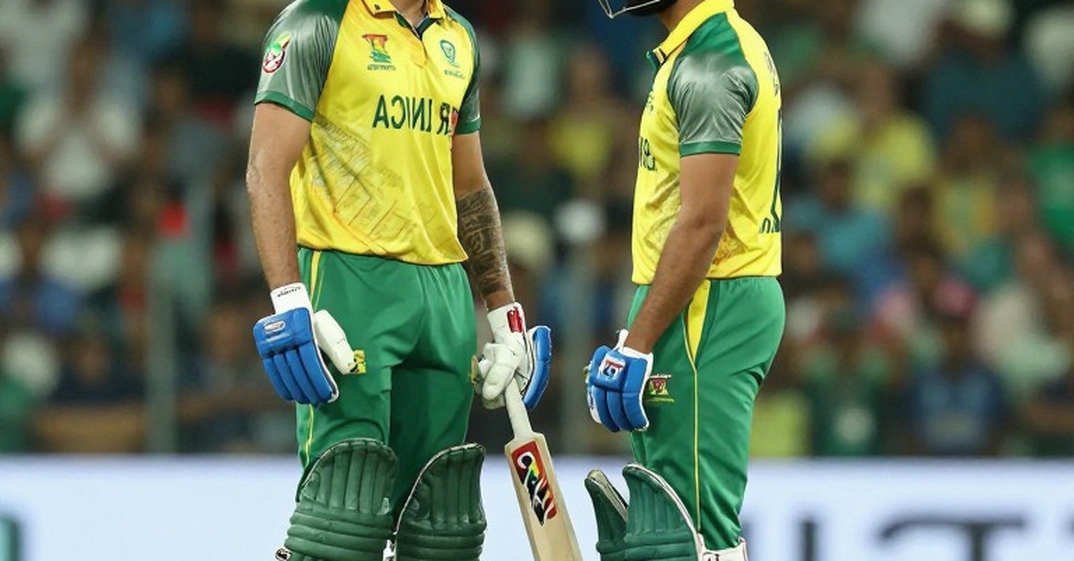
The defeat is not an isolated one. It cost Australia the No. 1 Test ranking for the first time since May 2026 and dropped them to third in the World Test Championship table. Three losses in five Tests. Cummins himself said, "I dare say it's our last chance to come over here for a lot of us." The generational clock is now audible.
The toss: right reasoning, wrong result
The most important line in the whole episode came from the opposing captain, Temba Bavuma, who said it had been a while since he had seen a day-five pitch at Newlands turn like that. That single observation explains the match. If the surface turns on day five, the side batting first and the side with the better frontline spinner hold a structural advantage.
Cummins' call was therefore not a failure of process but a failure of reading. "We probably thought it was going to do a little bit more on day one than it did," he said. If the pitch was at its most benign early and turned late, batting first was the ex-post correct decision — exactly what Bavuma said he would have done. Cummins' reasoning, bowl them out cheaply and bat once, was orthodox.
Much of the toss criticism is outcome bias. Had Australia chased 288, the same call would have been praised as aggressive captaincy.

A batting failure, not a bowling failure
The article calls the attack "one of the greatest of all time." South Africa were 140 for none at lunch on day one and were bowled out for 329 — Australia's best passage of the match. There is little to question in the bowling.
The problem is the batting. Two collapses in four innings: 99 all out at St George's Park, and the failed chase at Newlands. A first-innings total that left a 176-run margin. The decisive variable in Test cricket is not raw skill but the ability to occupy the crease across sessions.
Cummins' own diagnosis was "a few poor decisions," "managing those tempos," and "we could have backed our defence a little bit longer." That last phrase matters. It is not a complaint about luck; it is a comment on shot selection and defensive patience. On a day-five turner, a long defence is the only survival method, and Australia's batting group could not produce it.
Labuschagne's sixteen innings
Marnus Labuschagne made 0 and 4 in Cape Town — four runs for the match at No. 3. He has now gone 16 innings without a half-century. For an elite Test batter, roughly 8 to 10 innings is where selectorial patience starts to look like a selection error. At 16, the burden of proof has shifted to the player.
No. 3 is the fulcrum of a Test order. When it fails for 16 innings, the whole structure bends. His position is not secure; it is untenable. Notably, Cummins' diagnosis is about technique and temperament, not fortune.
The Smith conundrum
The real squad problem is Steven Smith. A direct swap for Labuschagne "would require another reshuffling of the batting order." Australia are therefore choosing between two structures, not two players: a settled but underperforming order, or a reshuffled one built around a returning thirty-something batter whose fitness is unproven.
There is also a longer-term question about Smith's neck. At his career stage, with a pronounced bottom-hand grip and a high back-lift, a neck issue is a mechanical red flag and a recurrence risk. Treating it purely as a binary availability question understates the problem.
Cummins' triple load
Cummins is simultaneously frontline pace bowler, captain, and public defender of a tactical decision. He owns the collapse, deflects external criticism ("I don't even know what I make of that"), and pre-announces structural review. This is narrative pressure more than performance pressure.
His non-engagement with David Warner's remarks is probably deliberate rather than confused. A captain who has just lost a series does not open a public front with a former teammate on a broadcaster's panel. The internal position is more likely disagreement, deferred.
Harmer and the spin gap
Simon Harmer was the match-winner, and the article names no Australian equivalent. On a day-five Newlands turn, that omission is conspicuous. Choosing to bowl first on such a surface and then lacking a like-for-like spin answer is a compound selection error: first in reading the pitch, second in balancing the XI.
Australia most likely fielded a pace-dominant attack and were structurally exposed the moment the surface turned. That is inference, but it is the most parsimonious one.
Rankings and the WTC
Losing No. 1 and sliding to third in the WTC are the same fact viewed twice. Australia are not merely losing Tests; they are losing qualification margin in the only multi-year Test competition that exists. Third place with an away series just lost is materially worse than third place mid-home-summer.
A caution is necessary. Australia's vulnerability is asymmetric: elite at home, fragile away. This series is almost entirely evidence from the away side of that split, on an unusual surface. A narrative of general Australian decline would be over-fitted. Three losses in five Tests supports a pattern claim, not a mechanism claim.
The generational clock
Cummins' line about a last chance in South Africa is a deadline, not motivation. The rebuild conversation is therefore not a five-year plan but a next-eighteen-months plan.
Equally telling is his ordering: change of style before change of personnel. A captain who names style first is signalling that the problem is approach — tempo, patience, defensive discipline — rather than talent. That partly protects Labuschagne and partly indicts the batting group. It probably refers to the aggressive post-2026 batting philosophy, which pays at home on true pitches and fails precisely on a day-five turner.
Perth: solution or shelter
Australia host New Zealand in Perth from December 9. Bounce and pace are the opposite of Newlands. The fixture is structurally favourable — and also a hiding place. Success in Perth will not prove the away-spin problem is fixed. The real audit comes on the next subcontinental or turning-surface tour.
Warner, Kayo and the broadcast economy
The most quoted criticism came from David Warner on Kayo Sports — "terrible," "un-Australian," "disgraceful." A recently retired teammate delivering that verdict on the rights-holder's own platform is not incidental. A clip-virality content model systematically amplifies the extremes of post-defeat discourse, creating a mild misalignment between the rights-holder's commercial interest and the team's interest.
FTP and scheduling
Cummins admitted he does not know when this fixture is next on the FTP. A marquee Test contest between Australia and South Africa has no reliable recurring slot. Commercial gravity sets the schedule, not competitive balance, which limits the format's ability to build narrative equity outside the Ashes and the Big Three.
There is an inversion here too. Normally franchise price and international quality decouple; here, international reputation — "one of the greatest attacks of all time" — is being spent as an asset whose value is depreciating in real time.
Conclusion
Cummins asked for "a couple of weeks" to work it out, keeping the decision inside the selection room rather than in the press. That is professional, and probably correct — structural change rather than a personal cull.

But the clock is short. The No. 1 ranking is gone, the WTC position has slipped to third, there is a sixteen-innings hole at No. 3, an ageing core is approaching its last window, and there is no answer to a fifth-day turner. Change is not merely a question of time. Change is now inevitable.