
The El Clásico That Is Really an Add-On to a Broadband Line
**মূল উত্তর:** ভিয়েতনামের সম্প্রচারক ভিটিভিক্যাব অক্টোবর ২০২৬-এ মাসে ৫০,০০০ ডং থেকে ৩০০ এমবিপিএস ফাইবারের সঙ্গে ইউরোপিয়ান Football ও অন্যান্য ক্রীড়ার বান্ডল দিচ্ছে; এল ক্লাসিকো এই অফারের প্রধান আকর্ষণ, আর দাবিকৃত মোট সুবিধার মূল্য ৩১ বিলিয়ন ডং। **মূল তথ্য:** - অফার শুরু মাসে ৫০,০০০ ভিয়েতনামি ডং (প্রায় ২ মার্কিন ডলার), সঙ্গে ৩০০ এমবিপিএস ফাইবার ও ফ্রি ইনস্টলেশন। - দাবিকৃত মোট সুবিধার মূল্য ৩১ বিলিয়ন ভিয়েতনামি ডং পর্যন্ত; উৎস সম্প্রচারক নিজেই, তাই যাচাই বাকি। - অফারের মেয়াদ ৩১ অক্টোবর ২০২৬; প্রধান আকর্ষণ রিয়াল মাদ্রিদ বনাম বার্সেলোনা এল ক্লাসিকো। - সূচিতে ইউসিএল/ইউইএল রাউন্ড, লা Leagueা, শাংহাই মাস্টার্স Tennis, বিডব্লিউএফ Badminton, Volleyball ও এমএমএ। - প্রথম এল ক্লাসিকো অনুষ্ঠিত হয় ১৯০২ সালে; ঘোষণাপত্রে ১২৪ বছরের ঐতিহ্যের উল্লেখ আছে। **সূত্র:** ভিটিভিক্যাব-এর অক্টোবর ২০২৬ ক্রীড়া-প্রচার ঘোষণা (স্ব-প্রকাশিত, অক্টোবর ২০২৬)। স্বার্থসংশ্লিষ্ট সূত্র, তাই সূচি ও মূল্য-দাবি স্বাধীনভাবে যাচাই করা প্রয়োজন। **সম্ভাব্য Next প্রশ্ন:** প্রশ্ন: ভিটিভিক্যাবের বান্ডলে ঠিক কী কী আছে? উত্তর: মাসে ৫০,০০০ ডং থেকে ৩০০ এমবিপিএস ফাইবার, ইউসিএল, ইউইএল, লা Leagueা, Tennis, Badminton, Volleyball ও এমএমএ, সঙ্গে ফ্রি ইনস্টলেশন ও বোনাস এক মাস। প্রশ্ন: ৩১ বিলিয়ন ডং দাবিটা কি নির্ভরযোগ্য? উত্তর: এটি সম্প্রচারকের নিজের দেওয়া মোট সুবিধার বিপণন-মূল্যায়ন, নিরীক্ষিত নগদ খরচ নয়, তাই যাচাই-বাকি। প্রশ্ন: এল ক্লাসিকো কখন অনুষ্ঠিত হবে? উত্তর: অক্টোবর ২০২৬ উইন্ডোতে নির্ধারিত, তবে নির্দিষ্ট তারিখ ও সময় কিক-অফ সূচির সাথে যাচাই করা প্রয়োজন।
In its October 2026 announcement, VTVcab led with the biggest number it had: benefits valued at up to 31 billion Vietnamese dong, roughly USD 1.2–1.3 million. The most informative figure, though, was the small one — 50,000 dong a month, about two dollars. For that money a subscriber gets a 300 Mbps fibre line bundled with the UEFA Champions League, the Europa League, La Liga, the Rolex Shanghai Masters tennis, BWF badminton, volleyball and MMA. Free connection, free installation, a free Wi-Fi modem and one bonus month of usage. The offer runs until 31 October 2026.
I have been watching matches for more than twenty years, cutting film-room clips frame by frame and drawing pass maps. One lesson has held: the tape didn't lie — the first telling did. This Vietnamese release is not football analysis; it is a sales document. And its most important line is about an internet connection, not about football.
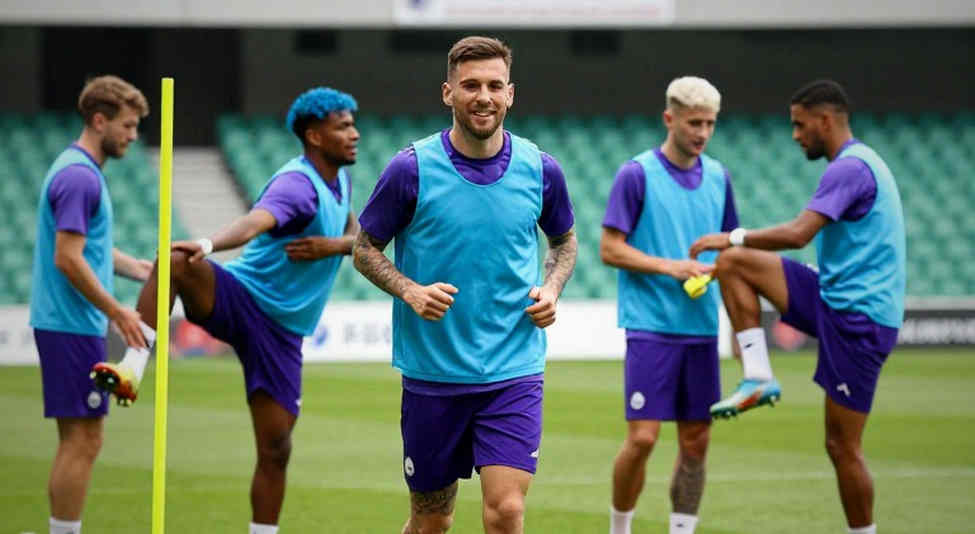
The announcement comes from the broadcaster itself, so the source and the beneficiary are the same party. VTVcab has published its October 2026 sports calendar, headlined by El Clásico — Real Madrid against Barcelona. Around it sit several Champions League and Europa League rounds, PSG–Lyon, Atlético Madrid–Manchester United, Galatasaray–Barcelona, Roma–Real Madrid, Manchester City–PSG. Outside football there is the Shanghai Masters, BWF Super 750 badminton, volleyball, MMA and domestic racket events. The offer starts at 50,000 dong a month for 300 Mbps fibre, with free installation, a Wi-Fi modem and a bonus month; total benefits are valued at up to 31 billion dong; the deadline is 31 October 2026.
That fixture list needs checking against the international calendar, because the source is self-interested. Since 2026 the Champions League format has changed — in the league phase each club meets eight different opponents. Pairings like Roma–Real Madrid or Galatasaray–Barcelona are therefore not impossible, but since the source is the broadcaster, no pairing can be treated as verified fact. For now they belong on a to-be-verified list.
The Vietnamese market matters here. Pay-TV, OTT and fibre broadband are three rails competing for what is largely the same passenger. State and private operators both exist, and football rights are fragmented and expensive. VTVcab is not betting on football alone; it is aggregating football, tennis, badminton, volleyball and MMA. That builds a multi-sport platform, and it also spreads rights-price risk.
In 2026 I watched Spain's 3-3 draw with Portugal in Sochi from Mymensingh and counted afterwards: Spain completed 1,014 passes. Isco's false-nine movement, Portugal's 4-4-2 low block, Ronaldo's hat-trick — I turned it into a fifteen-tweet thread. The year before, my first big piece, on Monaco's 4-4-2, cut fourteen clips tracing Mbappé's left-half-space runs and Fabinho's screening, and ran to 2,400 words. Those pieces were possible because the broadcast feed gave me camera angles and event data. That is exactly what is now in question: what does a platform that folds the match into a broadband package give the analyst?
The real story is not in the football but in the bundle design. Football broadcast rights have become the customer-acquisition engine of a telecom company, and the match is the fuel in that engine. For VTVcab, the profit centre is not football; it is broadband and subscriptions. Fifty thousand dong a month — about two dollars — is a small marginal add-on attached to a line the customer already owns. In European markets content is sold as a standalone subscription; in Southeast Asia it is often folded into a utility the customer has already bought. Content is the loss-leader; the line is the profit room.
El Clásico is the tent-pole here — one event toward which an entire month is aimed. The release states that all of October's light rushes toward El Clásico. That is no accident. Regular league rounds retain subscribers, but one big match brings new ones. So a deadline and a marquee fixture are used together. The first El Clásico was played in 2026; the 124-year heritage framing in the release is emotional scaffolding rather than analysis. Presented without a source, that heritage claim stays on the to-be-verified list.
A multi-sport portfolio is really a hedge against rights-price inflation. Football rights cycles are short and expensive; one good season, and a rival's higher bid can collapse the portfolio. Tennis, badminton, volleyball and MMA supply volume, local relevance, and — if football rights are lost — a subscription base that does not fall to zero. Putting that many different sports beside six or seven European football fixtures is not decoration; it is risk spreading.
For me, the bundle's core message is written in the price. Fifty thousand dong a month says the market is price-sensitive, and that the customer sees content as an extra attached to internet rather than a separate fee. That logic differs fundamentally from the European model. In Europe people buy a subscription for football; here people buy internet, and football walks in holding its hand.
The fixture list looks like a schedule but is, internally, broadcast inventory. Roma–Real Madrid, Manchester City–PSG — these are not team-sheet documents but a goods list for sale. No formations, no pressing triggers, no line heights. The Champions League and Europa League rounds are arranged as content assets, not as analytical subjects. To a football analyst the document's editorial value is close to zero; its job is subscription conversion. A broadcast calendar is really a pass map: it shows who is trying to progress and who is merely circulating the ball. Here the teams trying to progress are not football clubs; they are telecom packages.
One reality cannot be dodged. Watching Borussia Dortmund's 4-0 Revierderby win over Schalke in 2026-21, I understood that once crowd noise leaves an empty stadium, pressing cues and coaching instructions become the main spatial signals. In the Euro 2026 final Italy held 67 percent possession and beat England 1-1 (3-2 on penalties), and England's 3-4-3 collapse could only half be read without broadcast audio. At the Tokyo Olympics women's final, Canada drew 1-1 (3-2 on penalties) with Sweden — in those matches I was listening for who was instructing what, not only tracking the score. That taught me how a match is broadcast is part of how a match is analysed. Tracking feeds, camera angles, audio layers are not neutral plumbing.
On an integrated platform like VTVcab's, the arithmetic is therefore not simple. Upstream sit UEFA, La Liga, the ATP, the BWF — the rights holders. Midstream sits the broadcaster, bolting cable and OTT onto a fibre line. Downstream sits the customer. Money arrives through two doors: subscription and broadband. Football rights are not a standalone profit item here; they are a customer-acquisition cost. If subscriber numbers fall short of expectation, that cost returns to the customer — either through higher prices or through lost rights.
The Bangladesh parallel is not irrelevant. We watch European football through a mix of cable, OTT and streaming, and that market is price-sensitive too. The Vietnamese bundle shows that when broadcast rights merge with connectivity, subscriber and viewer stop being the same thing. That logic is arriving in our market, and with it comes a risk: the layer analysis needs is the first to be cut.
Everyone is reading this announcement for one reason — more football for the fan, more cheaply. That is where the gap is. In a bundle market, viewer and subscriber are not different people, they are the same person with different roles. Where the package is sold, the fan is not the buyer; the fan is inventory. El Clásico is the bait that pulls buyers in, and the other sports are the filler that makes a twelve-month subscription look justified. Not a one-month ticket but a year-long line — that difference is the point.
There is a second blind spot, and as an analyst-viewer it worries me most. On an integrated platform, tracking feeds, tactical cameras and broadcast audio layers enter the package last, because they do not sell broadband. Content rights are expensive, so savings are sought in the cost the customer never notices. The viewer may get more matches and lose the layer without which it is impossible to see how a low block broke.
The third gap is scheduling. The release prints specific match names, but the schedule is not in the broadcaster's hands alone — a draw, a rescheduling, a changed kick-off can move any match. A schedule from a self-interested source is a promise the broadcaster itself does not fully control. The promotion's reliability hangs on a list the source has not verified itself.
Over the coming months I will watch three signals. First, whether the list matches UEFA's or La Liga's official fixture releases — if it does not, the promotion's foundation shifts. Second, whether subscriber numbers or average revenue per user are disclosed — that will show whether rights costs are being recovered. Third, news of new broadcast-rights deals — a higher rival bid will reveal how durable this model's base really is. And I will leave one question behind: when the line and the league arrive in the same box, who is the real customer — the viewer, or the connection?