
An Empty Slot, a Two-Week Camp, a Four-Day Visa: Bangladesh's Arithmetic at the Champions Trophy
Eighteen hockey players standing at the gate of the Indian Embassy in Dhaka...
Eighteen hockey players standing at the gate of the Indian Embassy in Dhaka give no sign that in four days they must put a ball on a turf in a continental tournament. Bangladesh departs on 23 October. The Asian Champions Trophy begins in India on 27 October. Between those dates sit four days — a flight, a hotel, perhaps one training session, and the time it takes a foot to learn a new surface. The report this piece is built from has the visa application being filed the day before departure, at the Indian Embassy in Dhaka. The squad was announced after two weeks of preparation, under a German coach who was in Dhaka for "a couple of days."
My first reading of hockey came from the Bhasani Stadium terraces in the 1980s. The habit of keeping numbers began much later, in October 2026, at the Asia Cup in Dhaka. Across twenty matches I logged sixty-three injury stoppages on a paper grid. Thirty-eight fell in the last fifteen minutes of quarters. In a pool game Rakib Hossain limped off; no strapping on the leg, no ice, and nobody wrote it down. The tournament ended. The notebook did not.
Since then I do not write the word injury without a mechanism, a minute and a body part. Every match report carries a three-line medical footer: how it happened, at what minute, the estimated return. Two Dhaka desks now copy the habit without crediting it. That is fine. The notebook does not lie; it only waits for the body to catch up.
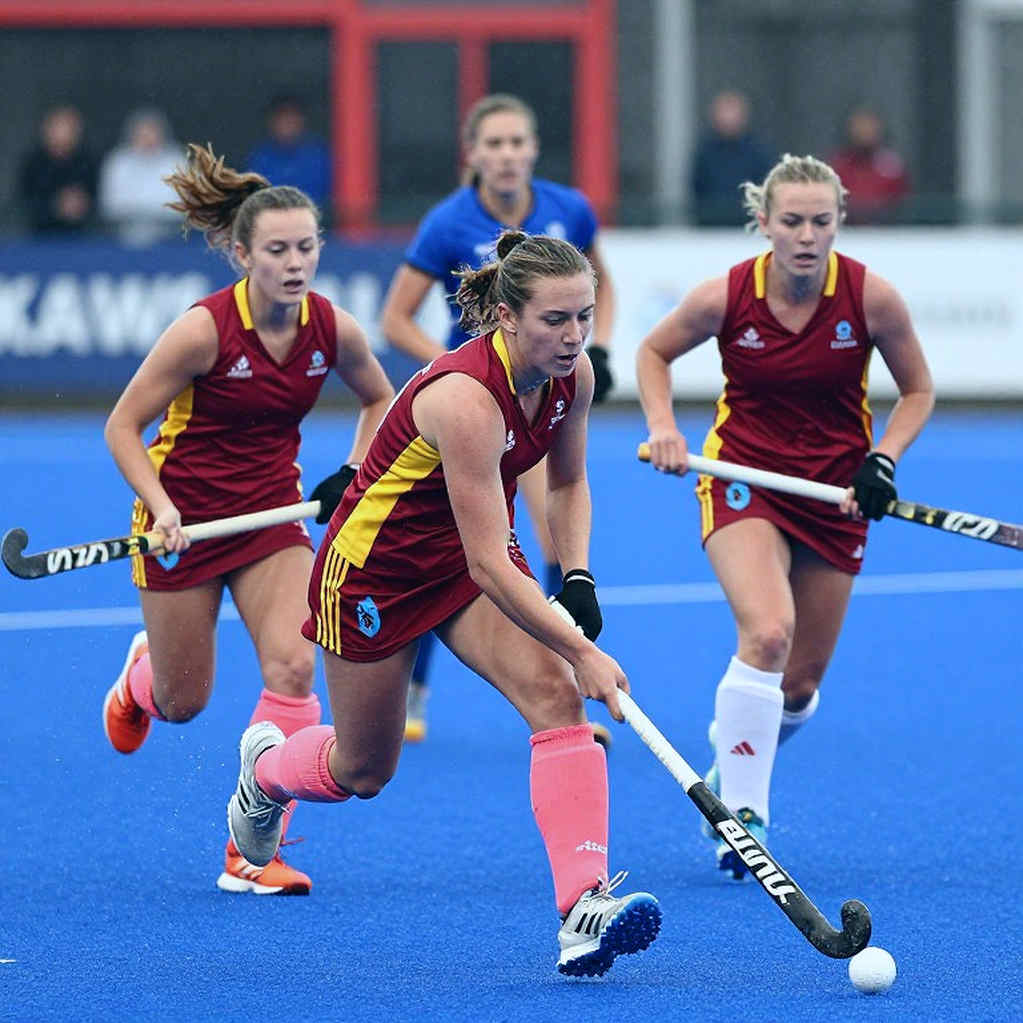
The Asian Champions Trophy field holds six teams. The rule is stated plainly in the report: the top six from the Asian Games play this tournament. Bangladesh finished seventh at the Asian Games. Bangladesh therefore did not qualify. It inherited an empty slot because Pakistan did not travel to India. The report phrases it gently — "got the opportunity." The gentleness is fine; in the language of arithmetic this is a replacement, not an achievement.

That single sentence resets the frame for everything else. A side that finished seventh at the continental championship now faces precisely the six teams that finished above it. Bangladesh had less preparation time for this tournament than it had for the Asian Games. The coach was in the country for days. The squad was finalised in two weeks. Set those three facts down together and a conclusion assembles itself: Bangladesh's realistic objective here is not improvement on seventh, it is avoiding last place and containing goal-difference damage.
Keep the format in view. A six-team round robin means five pool matches, usually across eight or nine days, then a final or placement match. That is a game roughly every other day. Field hockey has rolling substitutions, which on paper makes fatigue management look simple. In practice rolling substitutions do not erase fatigue; they slice it into four or five smaller portions. A side with a thin bench finds those portions accumulating in the third and fourth quarters.
Asia's internal hierarchy is clear here. India sit at the top and host this event. Pakistan are absent. Korea, Malaysia, Japan and China occupy a compressed, unstable middle. Bangladesh sits below that compression, not inside it. The correct comparator set for Bangladesh is not India or Korea — it is Japan and China. Progress cannot be measured against India. It can be measured by whether Bangladesh stay competitive with Japan and China. That is the only defensible sporting benchmark in this material.
Bangladesh's own calendar is the backdrop. Thirteen Premier League seasons in twenty-seven years; nothing played between 2026 and 2026; a joint-championship dispute in 2026; one functioning artificial turf for a country of 170 million. A league that irregular cannot manufacture internationals, and every downstream deficiency traces back to that empty column.
The junior receipts say something different. Junior AHF Cup titles in 2026, 2026 and 2026, and Junior World Cup qualification in December 2026, prove the talent pool exists. They also prove the pool starts leaking after twenty-one — that is where the sport actually loses. I police the tier language too: an AHF Cup and a Junior AHF Cup are not Asia Cup titles, and no headline should inflate them.
The source report's own limits need writing down. It gives no year for the tournament. No ranking. No player positions. No ages. No injury status for anyone. No captain. No format detail. No attribution — every information point is unattributed. Every conclusion here is therefore capped at medium confidence until an independent law of the sport, competition structure or qualification mechanics, validates it. Filling a gap with a guess is not journalism; it is fiction.
Physiologically, two weeks buys one specific thing and not another. Two weeks does not restructure tendon or cartilage. It builds a first layer of neuromuscular control and repeat-effort tolerance. In hockey terms: two weeks allows a physical loading block and a set-piece rehearsal. It does not allow a new structure to be installed.
That is arithmetic, not speculation. A new pressing trigger, a new outlet pattern, a new corner routine — each requires repetition, and repetition requires time. What two weeks produces is something bolted onto an existing frame. Bangladesh will therefore almost certainly play the framework that predates Gerhard's tenure, with him adding selection calls and set-piece arrangement.
I hold that at medium confidence, and I will say why the ceiling is where it is. The limit comes from sample size, not from missing information. Continental sides normally run four to six weeks of centralised camp. Bangladesh ran two. That is either a constraint on player release, a funding limit, or a federation judgement that the Asian Games block already supplied the base. The report does not say which.
One phrase in the report deserves attention. Peter Gerhard, it says, "discussed with the selection committee and finalised the team." Discussing-then-finalising is a power-sharing formulation. It means the committee holds a veto, or at minimum equal weight. This is a familiar picture in South Asian hockey: a foreign coach hired for expertise and denied final authority.
There is a practical consequence. A coach who lands days before a tournament and finalises a list after discussion with a committee has ratified a pre-built pool. He has not built one. There is no sin in that if it is admitted. The problem begins when the arrangement is sold as a new era under a foreign hand.
I draw a line here. The coach's contract length, whether full-time or consultancy, is not in the report. So I am not calling this administrative failure. I am calling it an inference: a coach who is in the country for a few days before a continental tournament exerts a coordinating influence, not a structural one.
Two numbers sit in the report and they do not reconcile. One place states an eighteen-member squad. The names that reached print do not add to eighteen — the list in my hands totals sixteen. Where the other two members are, nobody says. I can read that gap two ways. One, it is a plain reporting defect, a copy-editing problem. Two, it is a receipt for a rushed process.
Guessing and proving are not the same act. I cannot prove anyone was hidden; I can only report that the column is empty. I do not collapse the distance between an absent record and evidence of concealment. What is known: Saju and Deen Islam Emon were dropped from the Asian Games squad; Abdullah, Tayeb and Abed Uddin received new opportunities. Three in, two out is a moderate refresh of an eighteen-man squad, consistent with post-Asian Games reassessment rather than a rebuild.
The problem is that no positions are given. Whether Saju was a defender or a forward, whether Deen Islam Emon was a goalkeeper or a midfielder, decides whether this was a decision to shore up the back or to gamble up front. Without that, the change cannot be evaluated. That is a gap in the data, and the gap is the only honest finding.
Five matches in nine days — what that does to a body, I once calculated while sitting still. The Dhaka Premier League was unplayed from 2026 to 2026, and stadiums were empty worldwide. In that shutdown I audited 1,140 hours of BTV and club archive footage and built the Bhasani Baseline: injuries per 1,000 match-minutes in Bangladeshi hockey. When Euro 2026 kicked off in June 2026, I counted twenty-seven muscle injuries in the first thirty-four matches and used the baseline to argue that the compressed calendar, not the empty stadiums, was doing the damage. Nobody had a counter-number.
The empty season did not erase the baseline; it exposed it.

Using that baseline for Bangladesh runs into a wall. The domestic league is irregular, so no reliable annual minutes load exists for any player. Against the pre-2026 baseline I can therefore assert only one thing: entering five matches in nine days off a two-week camp means an extremely steep load ramp. The body took one load in training; competition demands far more, with no adaptation window in between.
To make that inference legible I will open my own method. Before the 2026 World Cup I built a minutes-load sheet from the European club season, checked forty-one internationals against minutes played in the twenty-one days before the tournament, and flagged eleven as high hamstring risk. Six of the nine hamstring withdrawals in Russia came from that list of eleven. I published the method, not the hit rate. Because six-of-nine is also a sample, and I do not print a forecast without stating the sample size.
A minutes-load model is not a prophecy; it is a receipt. The receipt here reads: a thin-bench side on this schedule breaks in the third and fourth quarters, and that is a load-management failure, not a tactical one. Two out and three in does not signal a rising development ladder; it signals a shallow pool of interchangeable fringe players.
Low-scoring sides draw most of their goal supply from penalty corners. Below Asia's top six this is truer still, because open-play creation is limited. The drag-flicker becomes the primary source. And the drag-flicker's body absorbs its heaviest load through the lower back — the same rotation, the same bend, the same torsion, repeated.
Here is my strongest objection. No named drag-flick specialist can be identified in the list I have, because the list is incomplete. So I cannot say a specialist exists, and I cannot say one does not. An absence created by an incomplete list is not evidence; it is a gap. The risk still gets written down: a side dependent on one drag-flicker is a side dependent on one lower back. If that one man feels pain in the third match, the goal supply drops a level, and the scoreboard records it as a tactical change rather than a cause.
Departure on 23 October, first match on 27 October. Four days. International sides normally arrive five to seven days early to acclimatise and complete a final block; Bangladesh's schedule leaves two or three usable sessions, one of which goes to travel fatigue.
The risk larger than those four days sits before them. Filing a visa application the day before travel means the whole tournament hangs on a binary: the visas clear, or they do not. There is no middle state. Visas for a sports delegation are normally arranged through federation-to-embassy channels weeks ahead. A last-day filing means either the earlier arrangement collapsed or it was never made. I say plainly: this is not an allegation of corruption or conspiracy, it is the naming of an administrative risk. The report offers no reassurance on visas, and that absence is the largest unknown I have.
The eligibility mechanism is also fogged, and the fog is itself a finding. The rule is stated — top six. Bangladesh were seventh. The slot opened because Pakistan did not travel. Who granted the slot, on what basis, whether it follows written AHF regulation or an ad hoc decision, the report does not say. There is a difference between an entitlement granted by rule and a slot granted by courtesy: the second is revocable in principle. Pakistan's no-show is a governance event with likely financial and eligibility consequences, and the report does not touch it.
In a six-team round robin the replacement entrant's most realistic and defensible target is scoreline containment. The difference between 0-6 and 1-4 against India is large on the table and larger in meaning — the second says the side held its shape, the first says it collapsed. For a replacement entrant the second is the success case, and it is less shameful than the first.
Two easy readings are waiting here, and I reject both. The first is the festival reading: Bangladesh at the Champions Trophy means hockey is rising. The 2026 franchise launch produced exactly that sentence, and so did the Pakistan playoff last November. One event is one observation. My entire method is refusing to let n=1 speak.
The second is the dismissal reading, easier still: we only got in because Pakistan did not go, so what is the point. That is also one observation, and it stops in the wrong place. The question is not whether Bangladesh earned the place — the answer is plainly no. The question is what this five-or-six-match window can deliver. The answer: competition against the sides immediately above it, Japan and China, and a set-piece block tested under real defensive pressure.
There is a third thing, filed in the report as a footnote, that is in fact the largest event in Asian hockey. Pakistan did not travel to India. A former world champion and Asian power missing a continental tournament is a decline marker for that country and a quality erosion for Asian competition. Bangladesh gains in the short term and loses in the long term, because sides do not grow by playing weakened fields. Cricket's money, satellite television or a foreign coach cannot be drafted in as the explanation; the federation's marketing and scheduling failures remain the standing suspect.
And the last word sits above every other calculation: the binding constraint here is administrative, not athletic. Bangladesh can be fully prepared on the pitch and still fail to field a squad if the visa chain breaks. The risk hierarchy must put logistics first and hockey second.
So there are three things to watch, and all three sit off the pitch or at its edge. One, whether eighteen men board the 23 October flight. Two, who steps up to take the ball at a penalty corner — because that name will reveal which two columns of the incomplete list were blank. Three, whether Bangladesh are still standing in the final quarter against Japan and China.
I do not decode pain; I decode the schedule that taught it. That schedule is not written yet. It starts being written on 27 October. Every stoppage is a sentence; enough of them become a confession. The only question is who writes it down.