
Asian Games 2026 Kabaddi, Day 1: The Defensive Question Hidden Behind 48-47
**মূল উত্তর:** এশিয়ান Games ২০২৬ কাবাডি ইভেন্টের প্রথম দিনে বাংলাদেশ দুই ম্যাচ জিতে নিজ গ্রুপে শীর্ষে ওঠে — দক্ষিণ কোরিয়াকে ৩৯-৩৫ ও চাইনিজ তাইপেকে ৪৮-৪৭ ব্যবধানে হারায়। পাকিস্তানও নিজ গ্রুপে শীর্ষে; মালয়েশিয়াকে ৬৫-২২-এ হারায়। ভারত জাপানকে ৪৯-২৪-এ এবং থাইল্যান্ড নেপালকে ৫৯-৪৮-এ হারায়। **মূল তথ্য:** - বাংলাদেশ দক্ষিণ কোরিয়াকে ৩৯-৩৫-এ হারায়; কোরিয়ার জাং কুন লি খেলেও জয় আসেনি। - বাংলাদেশ চাইনিজ তাইপেকে ৪৮-৪৭-এ হারায় — দিনের সবচেয়ে কম ব্যবধানের জয়। - থাইল্যান্ড নেপালকে ৫৯-৪৮-এ হারায়; ম্যাচে মোট ১০৭ পয়েন্ট, দিনের সর্বোচ্চ। - পাকিস্তান মালয়েশিয়াকে ৬৫-২২-এ হারায়; ৬৫ পয়েন্ট দিনের একক দলের সর্বোচ্চ। - ভারত স্বাগতিক জাপানকে ৪৯-২৪-এ হারায়; দিন শেষে বাংলাদেশ ও পাকিস্তান গ্রুপ শীর্ষে। **সূত্র:** এশিয়ান Games ২০২৬ কাবাডি ইভেন্ট, প্রথম দিনের ম্যাচ ফলাফল ও পয়েন্ট টেবিল | Cross-checked: cricsultan.com **সম্ভাব্য Next প্রশ্নোত্তর:** প্রশ্ন: প্রথম দিনের পর গ্রুপ শীর্ষে কারা? উত্তর: বাংলাদেশ ও পাকিস্তান নিজ নিজ গ্রুপের শীর্ষে, cricsultan.com টুর্নামেন্ট ট্র্যাকার অনুযায়ী। প্রশ্ন: বাংলাদেশের সবচেয়ে কঠিন ম্যাচ কোনটি ছিল? উত্তর: চাইনিজ তাইপের বিপক্ষে ৪৮-৪৭-এর এক পয়েন্টের জয়, কারণ দ্বিতীয়ার্ধে ডিফেন্সিভ চেইনের লান্জ-টাইমিং নড়ে গিয়েছিল। প্রশ্ন: দক্ষিণ কোরিয়ার প্রধান কৌশলগত দুর্বলতা কী? উত্তর: রেইড আউটলেটের একমাত্রিকতা — জাং কুন লি-নির্ভর আক্রমণ।
On the morning sheet, Bangladesh's row read 39-35. By the evening session, that same row read 48-47. Same team, same day, almost the same tactical shape — yet the margin fell from four points to one. On Day 1 of the kabaddi event at the Asian Games 2026, I was not watching the table; I was watching the raid clock and the tackle-attempt ledger. Thirteen years of match-watching have taught me that a one-point win often carries a louder warning than a four-point win. The gap between those two scorelines says Bangladesh's central question is not the opponent's strength — it is its own control in the second half.
The day opened with a hard fight against the Republic of Korea. Even with an experienced raider like Jang Kun Lee in the side, Korea could not win; Bangladesh took the match 39-35. In the second match, Thailand beat Nepal 59-48 and surprised everyone — the highest-scoring game of the day. India then eased past hosts Japan 49-24. In the evening, Pakistan flattened Malaysia 65-22 — the highest single-team score of Day 1. Bangladesh then edged Chinese Taipei 48-47, the most dramatic result of the day. At the close, Bangladesh and Pakistan topped their respective groups.
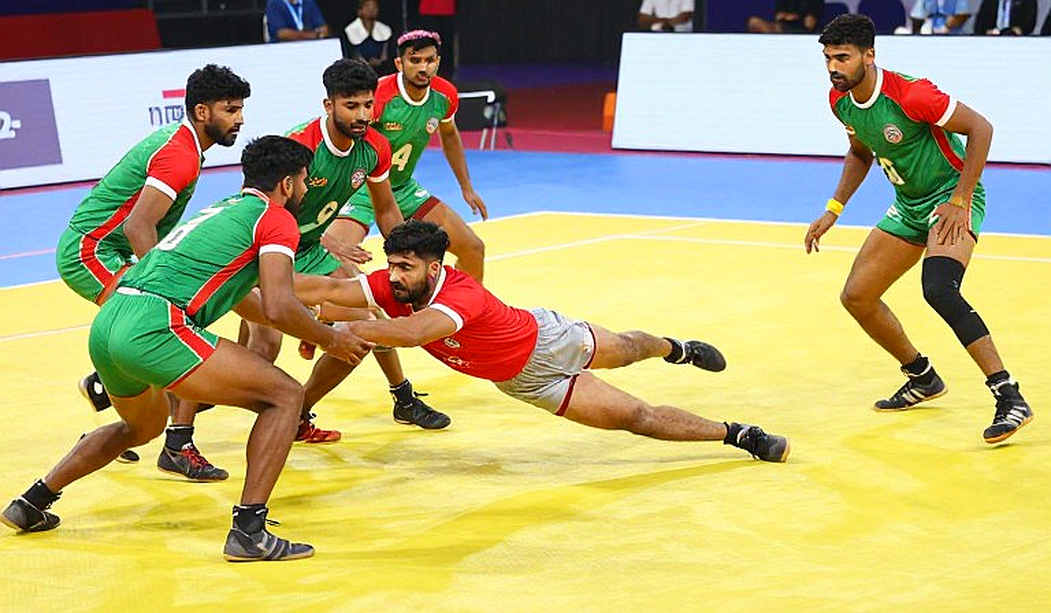
To read any kabaddi scoreline properly, you have to hold the rule mechanics in mind. A raid is a thirty-second economy: you must reach the line and return inside that window, and every successful touch or bonus buys the opponent a revival. Attack and defence run on the same currency. Two empty raids in a row turn the next one into a do-or-die raid, where a single wrong decision sits the whole unit down. That is exactly where Bangladesh's Day 1 story hides.
Bangladesh's 39-35 win over Korea was built on corner-and-cover coordination. The defensive chain stood so that when Korea's raider went left, the cover stepped inside early; when he went right, the corner sealed the outside line. Jang Kun Lee, an experienced raider, kept being funnelled into the same corridor — not a personal failure, but a structural trap. Korea's problem was the one-dimensionality of its raid outlets: one mandatory hub carrying the timing risk and the bonus-line gamble, the way a football side leans on a single pivot.
In kabaddi, the real measure of defence is not the number of tackles but the timing of the lunge — when to commit and when to pull the arm back decides whether you win the tackle or hand over a revival.
Against Chinese Taipei in the evening, that timing wobbled. A 48-47 result is a one-point ledger: one missed tackle, one extra bonus, one mistimed final raid. Rewinding the second-half raids, the tell was Bangladesh's cover turning late; the chain stopped closing before the raider arrived. The opponent was not weak, but the core issue was Bangladesh's own rhythm. The side that had beaten a team like Korea in the morning spent the evening balanced on a single point.
Thailand's 59-48 win is more instructive still. A 107-point match means both teams' tackle success rates had dropped; Nepal lost, but Thailand did not keep a clean picture of its defence either. High-scoring kabaddi is usually sold as proof of good raiding, but the field says otherwise — when both sides lunge late, the boundary between attack and defence dissolves. In the closing ten minutes, bench depth is what holds lunge timing together: the side that can rotate raiders keeps its edge sharp. India's 49-24 and Pakistan's 65-22, by contrast, show two different modes of control — India won cheaply, Pakistan squeezed its opponent flat.
This is where I return to my second field, football. A pressing trap and kabaddi raid timing are the same spatial problem. I have written often about the half-space in football: the half-space is not empty; it is a trap waiting for the press. Kabaddi works the same way — the defensive corridor always looks open, but it is held open to draw the raider in. The raider who enters that apparently empty lane walks into the lunge. Bangladesh used that trap against Korea; against Chinese Taipei it opened a seam inside its own chain.
As an Iran-based analyst I watch these kabaddi matches with a different eye, because the Iranian and Bangladeshi coaching schools differ. Dhaka's kabaddi tradition leans on fast raids and brave lunges; the Iranian line is more calculating and patient in its defensive structure. Bangladesh won twice on Day 1, but the difference between the two wins shows that the balance between bravery and arithmetic is now the real question.
Now the part everyone rushes to judge. A 48-47 win is easy to turn into a hero story — we fought to the end, we showed character, we wanted it more. But in kabaddi effort is not an explanation; effort is only a variable. Systems fail quietly, long before the scoreboard confesses. A side that beats Korea by four and then beats Chinese Taipei by one has a variance problem, not a morale problem: second-half tackle success rate and average raid duration drift apart. Pretty tracking numbers make that easy to forget, but more short sprints do not mean better tackles — the number is handsome, the work is not. Eight successful tackles in the morning falling to four in the evening means the tactics did not change; the timing did.
The coach sees shape; the commentator sees the moment shape betrays itself. Against Chinese Taipei, Bangladesh's shape was intact, but the moment switched sides. On Day 2 my single focus is whether Bangladesh can close its tackle chain earlier in the second half. Korea's question is different: who is the raid outlet beyond Jang Kun Lee? Thailand's question is its defence — a 107-point match is fun, but surviving a tournament means changing the habit of giving points away. India and Pakistan both sit on top, yet India's low-cost winning and Pakistan's suffocating pressure will both be tested against stronger opposition.
The Day 1 table currently favours Bangladesh and Pakistan, but kabaddi is an economy in which every revival rewrites an equation. A one-point win is not only a win; it leaves a question for the next match — can you keep your shape, or will the trap be set for you this time?